Truly small businesses—without a large shop or significant startup capital
Many young people, women entrepreneurs, and social media sellers in Iraq are looking for a small business they can start with limited resources—without renting a shop, buying expensive equipment, or hiring a large team.
The best opportunities for someone with limited capital are not necessarily the businesses with the highest sales. A suitable small business can be tested with small quantities, generates reasonably fast cash flow, can be operated from home or online, and does not create high monthly overhead.
For that reason, this article focuses on ideas that require almost no capital, very little capital, or limited capital, with room to expand gradually after proving that real demand exists.
Market developments also support this type of venture. Iraq’s roadmap for developing micro, small, and medium-sized enterprises identifies e-commerce and electronic payments as important avenues for small-business growth. The Central Bank of Iraq is also continuing its efforts to expand the use of digital payments and reduce dependence on cash. (Iraq’s Ministry of Planning and the United Nations Development Programme, Central Bank of Iraq)
The best low-capital small business ideas in Iraq
| Business idea | Capital level | Lowest-cost way to start | Main source of profit |
|---|---|---|---|
| Pre-order online store | Very low | Display products before purchasing them | Price margin and repeat orders |
| Homemade meals or desserts | Low | Produce only after receiving orders | Daily orders and subscriptions |
| Perfume samples and personal-care products | Low | Begin with small quantities and selected products | Margin and repeat purchases |
| Phone accessories on demand | Low | Stock only a few fast-moving items | Fast turnover and installation services |
| Personalized gifts and packaging | Very low | Produce after the order is confirmed | Customization and special occasions |
| Social media management and content creation | Almost none | A phone or computer and the necessary skills | Monthly retainers |
| Tutoring, training, or translation | Almost none | Sell your knowledge and time | Sessions and packages |
| Simple sewing and clothing alterations | Low | Work with tools you already have | Recurring service fees |
| Packaging and selling local food products | Low | Produce in small batches | Packaging and added product value |
| Commission-based selling and order management | Almost none | Work with product owners | Sales commission or monthly fee |
This comparison is approximate. Profitability varies by city, skill, competition, pricing, and the quality of the product or service.
1. A small online store using a pre-order model
A small online store does not require a large shop or warehouse. Choose one category—such as lightweight household items, children’s products, clothing, or accessories—display a limited selection, and order each item from your supplier after the customer confirms the purchase.
The pre-order model reduces the amount of capital tied up in unsold inventory, but it requires a reliable supplier, accurate pricing, and clear delivery times. Start with only 10–15 products, monitor which receive the most demand, and keep small quantities only after a product proves it can sell.
Avoid opening a general store that sells everything. Choose a clear niche so customers immediately understand why they should buy from you.
2. Homemade food or dessert business
You can start from your home kitchen and prepare limited quantities to order. Options include employee meals, Iraqi dishes, kubba, pastries, desserts, cakes, and healthy meal plans.
To reduce both capital requirements and waste, use pre-orders and offer a small menu instead of too many items. You can also provide weekly subscriptions for employees or students. Subscriptions can create more stable income than occasional one-off orders.
Success depends on hygiene, consistent taste, good packaging, and on-time delivery. Review the food-safety and local licensing requirements that apply in your area before selling.
3. Selling perfume samples and personal-care products in small sizes
Instead of opening a full perfume shop, buy a limited number of authentic fragrances and sell them in small sample bottles, or focus on a selected range of personal-care products with repeat demand.
This model allows customers to try products at a lower price while allowing the business owner to begin with a narrow selection. Sample sets and small gift bundles can also increase the average order value.
Trust is essential in this category. State the source of your products, use clean containers, label the product name and quantity clearly, and never present unknown or counterfeit items as authentic.
4. Phone accessories on demand
Phone cases, screen protectors, cables, chargers, and earphones can be sold with limited capital if you focus on the most widely used phone models in your area.
Do not buy dozens of items for every model. Keep a few fast-moving products in stock and offer other colors and models on demand. Screen-protector installation or local delivery can increase the revenue from each order.
5. Personalized gifts and packaging on demand
You can prepare birthday, graduation, engagement, wedding, and corporate gifts from home. There is no need to buy printing equipment at the beginning. Partner with a print shop for production while you handle the design, gift preparation, packaging, and marketing.
With this model, production costs are paid only after the order is confirmed. Your profit comes from design, coordination, personalization, and packaging. A well-organized online catalog helps customers choose the occasion, color, budget, and delivery date.
6. Social media management and content creation
If you are skilled at smartphone photography, design, copywriting, or short-form video, you can manage the social media accounts of restaurants, shops, and home-based businesses.
This business does not require inventory; it requires skill, time, and discipline. Begin with one industry, such as restaurants or clothing stores. Instead of offering isolated services with unclear prices, sell a defined monthly package containing a specific number of designs, videos, and posts.
7. Tutoring, training, and translation
Any in-demand skill can become a source of income: English, computer skills, design, accounting, school and university subjects, translation, or résumé writing.
The service can be delivered from home or online. Sell a multi-session package instead of a single lesson. The clearer the result—such as preparing for an exam or learning a specific software program—the easier the service will be to market.
8. Simple sewing and clothing alterations
If you already own a sewing machine or have experience in the field, you can begin with clothing adjustments, shortening, repairs, and simple sewing. Name or logo embroidery can be offered through a partnership with a specialist provider.
This model does not require a large fabric inventory because the customer brings the item, while you charge for the service. Accepting appointments online and showing before-and-after examples can help build trust.
9. Packaging and selling local food products
You can buy small quantities of dates, nuts, spices, coffee, or rural products, then clean and package them attractively in practical sizes.
The value does not come from the product alone. Hygiene, packaging, clearly stated weight and ingredients, production dates, and easy ordering all make a difference. Start with only two or three products and test demand before purchasing larger quantities, while fully complying with food-safety and product-labeling requirements.
10. Commission-based selling and order management for small businesses
Some home-based producers lack the time or experience to photograph their products, market them, and respond to customers. You can display their products and manage orders in return for a commission on each sale or a fixed monthly fee.
You do not need to purchase the products yourself, but you do need a clear agreement covering prices, delivery, returns, commission, and each party’s responsibilities. Start with one business and add more only after building an organized order-management process.
Which business fits your available capital?
If you have almost no startup capital
Choose a business based on your skills and time, such as:
-
Social media management.
-
Tutoring or translation.
-
Content writing and product photography.
-
Commission-based selling and order management.
If you have very little capital
Choose a pre-order business model, such as:
-
A small online store.
-
Personalized gifts and packaging.
-
Perfume samples.
-
Phone accessories.
If you can produce goods from home
You can start with:
-
Meals and desserts.
-
Packaging local products.
-
Sewing and clothing alterations.
How can you start without losing your capital?
-
Choose one idea and one customer segment.
-
Start from home and do not rent a shop before proving sales.
-
Offer a limited product range or one clearly defined service.
-
Use pre-orders instead of buying large amounts of inventory.
-
Test your idea with the first 10 paying customers.
-
Record the cost and actual profit of every order.
-
Reinvest part of the profit in products that have already proven successful.
Calculate profit using this formula:
Net profit = Selling price − Product cost − Packaging − Delivery − Advertising − Fees − Returns
Do not treat the full difference between the purchase price and selling price as net profit. Small expenses can consume the entire margin.
Mistakes to avoid
-
Renting a shop at the beginning when it is not necessary.
-
Buying a large quantity simply because the wholesale price is lower.
-
Displaying dozens of products before understanding customer demand.
-
Mixing business funds with personal spending.
-
Selling at a low price without calculating delivery and return costs.
-
Relying only on social media messages as order volume grows.
-
Expanding before the core idea generates repeat sales.
Turn your small project into an organized business with IQ Soft Systems
A small business does not need high expenses, but it does need proper management from the beginning. Instead of losing orders among Instagram, Facebook, and WhatsApp messages, you can keep your products, orders, and customers in one place.
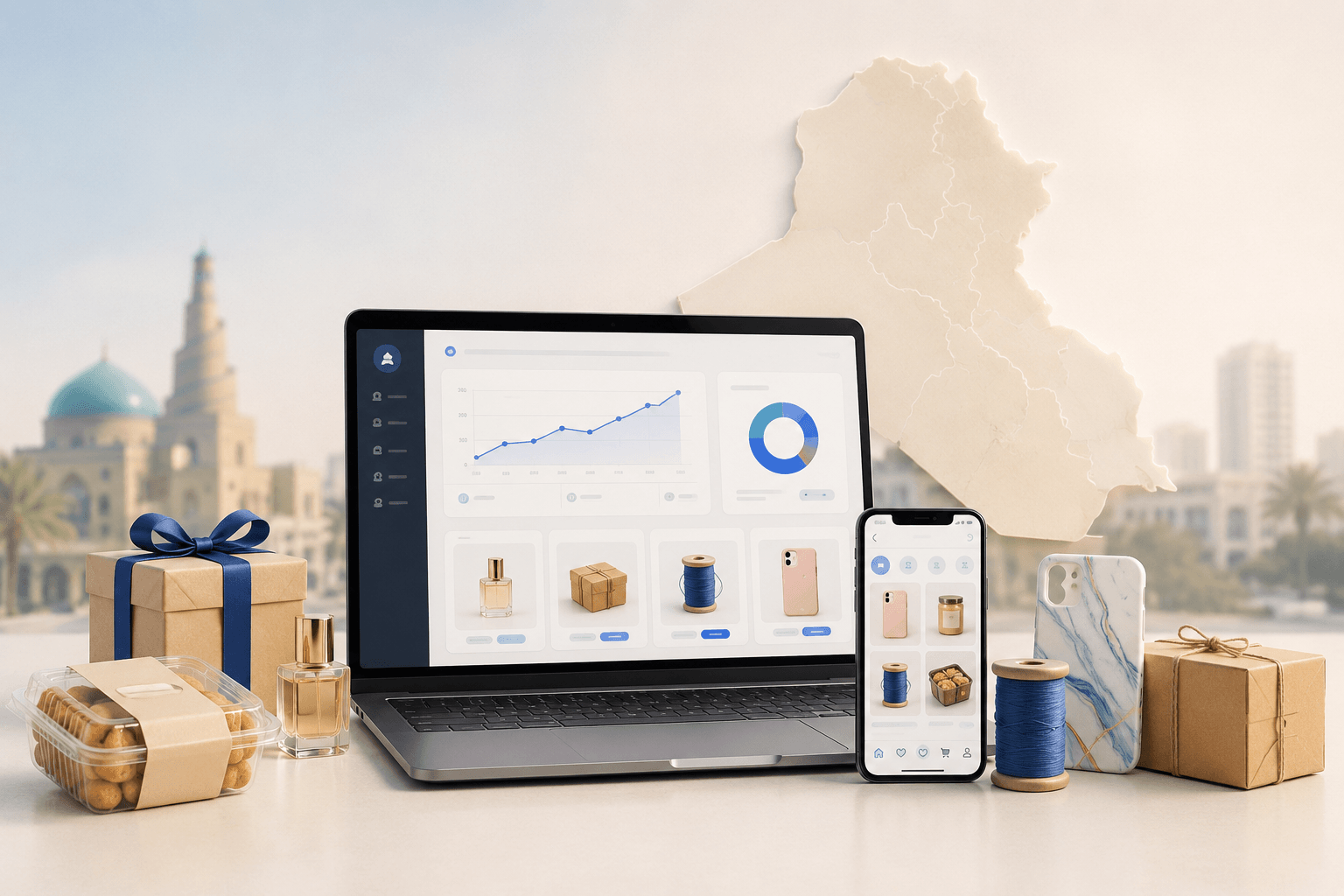
With IQ Soft Systems, you can launch a professional online store at an affordable cost without needing a programmer or designer. From one easy-to-use dashboard, you can:
-
Add products, images, and prices.
-
Receive orders and organize customer information.
-
Track quantities and your limited inventory.
-
Set payment and delivery methods.
-
Identify best-selling products and review reports.
-
Choose a design that matches your business identity.
Whether you sell perfumes, desserts, gifts, or phone accessories, you can start from home with a small product range and expand as your orders grow.
Do not wait until you own a shop or have significant capital. Start with what you have, test your idea, and turn it into an organized online store with IQ Soft Systems.
Launch your store today at www.iqsoftsys.com.